Friday, April 5, 2013

Dandelion and Dock


Dandelion and Dock Roots

Getting areas ready to plant means taking out some things. both Dandelion and Dock are prolific on my farm and I try to control them by digging the roots and using them. 

Yellow dock (Rumex crispus)
Yellow Dock is a weed found in many pastures. It is also known as curly dock because the leaves have undulating egdes. It is edible and sometimes eaten as a potherb but it is the deep taproots that have medicinal properties. Its main use is as a laxative due to the anthraquinones found in it such as emodin and chrysophanol. But has also been used to improve the absorption of minerals and the help a headache.

Yellow dock is a purifying tonic and so can be used topically for a number of skin conditions. It has anti-inflammatory and anti-itch properties. Although it is most widely used for acne it has also been used for eczema, psoriasis, rash, boils, and abscesses and to calm irritated skin. It is said to improve blood flow (a good thing for most conditions). Because of tyrosinase inhibitors dock could potentially decrease age spots on the skin.


Dandelion (Taraxacum officinale)
The word Dandelion means ‘lions tooth’ referring to the jagged edges on the leaf. There are many similarities between dock and dandelion in that they are both detoxifiers and great for skin care including acne. Dandelion is also a pot herb (cooked) and the raw leaf can be used as a salad green. The flower is used to make wine and fritters and we’ve made coffee substitute from the roots before. The herb is very nutritious and a source of vitamins A, B, C, and D, as well as minerals such as iron, potassium, and zinc.

Dandelion is both a laxative and a diuretic (increasing urination to decrease water content of the body and thus decrease blood pressure). It has been used to detoxify the liver and gallbladder and to help decrease a headache.  In skin care it has been used to treat acne, eczema and psoriasis. It is antiinflammatory and an antioxidant. It has an effect on the cells of the dermis to strengthen that layer of skin. Many herbalists recommend it for breast health and medical science is looking at the possibility of dandelion to inhibit cancer cell growth.

Don’t plant dandelion or dock though; come to my place and dig them up if you need some; both spread wildly!

Wednesday, March 20, 2013

10 Skin Care Tips


Skin Care doesn't have to be complicated. Here are 10 tips to better skin.

1. Drink plenty of water to stay hydrated
2. Eat foods rich in vitamin C, vitamin A and antioxidants – that means fruits and vegetables!
3. Apply lotion/cream or oil to the skin after getting out of the shower while the skin is still damp.
4. Don’t overwash. Excess soap/detergents and hot water can dry the skin. Handcrafted soaps are generally mild enough to use frequently. Focus on washing underarms and genitals since they contain apocrine glands which secrete a type of sweat that can lead to rancid odors.
5. Get occasional massages as they help move blood and lymph.
6. Exercise regularly.
7. Examine your skin regularly for abnormal moles as well as for scratches, scrapes or sores. If you have an abnormal mole, get it checked out right away by a dermatologist. If you have persistent sore that doesn’t heal, get it checked out by a dermatologist.
8.  Treat very dry itchy skin with a salt scrub in the shower or add a tablespoon of bath oil to your bath.
9. Be sure to use a product with an oil containing linoleic acid; these include evening primrose oil,  pumpkin seed, grapeseed, hemp, raspberry seed, rice bran oil, rosehip seed, safflower, sesame, soy, and sunflower.
10. Drink Green Tea. Studies show that antioxidants in green tea can help protect collagen, decrease the risk of skin cancer and help prevent UV damage.

Saturday, March 2, 2013

Chemistry & Physiology Continuing Education

Do you ever find yourself reading through product ingredient literature, how tos, research papers or skin benefits and wish you could better understand, evaluate and integrate that knowledge into your work?


Every successful entrepreneur realizes the importance of continuing education. Many people entering the cosmetics industry did not study sciences in college. If you are one of these and are now feeling the need for more science education to further your career we can help.


If you have a thirst for knowledge and wish to cultivate your business we have two opportunities for you; The Nature of Chemistry and The Nature of Skin. These text based courses of study consist of notes or ebooks that start at a basic level and gradually go deeper into the topics. These classes are especially suited to the herbalist and those in the skin care business. This is your opportunity to learn chemistry and skin physiology from a biochemist  and cosmetic formulator as well as herbalist.

In The Nature of Chemistry I have laid down the most important chemistry topics that you would find in beginning college chemistry courses from general chemistry, organic chemistry and biochemistry. I leave out a lot of the boring stuff and only keep what you need for your business in skin care or herbalism.  No, you won’t learn everything about cosmetic ingredients in this class but it will make it much easier for you to understand future reading/research you do, allowing you the control to take your knowledge and skills to a new level.

In The Nature of Skin I start with the basic anatomy of skin and its functions and progress deeper into the role of skin and its chemical makeup. This will help you learn more about the role of what goes on the skin. We’ll talk about the Skin Barrier Function and Absorption as well as proteins and wound healing.


I love to teach and have taught a number of classes at various colleges in Colorado and have given talks at a number of meetings including The Handcrafted Soapmakers Guild and the Society of Cosmetic Chemists. You don’t have to travel anywhere or be in front of your computer at a certain time. Its completely self paced. Give your business a boost and invest in your future with these two classes at a value. These ebooks are appropriate for someone who has never studied chemistry or physiology, or for someone who has studied these topics but wants a more relevant review.

Use these Enotes at your own pace and read them at your leisure. Now is the time, challenge yourself and expand your knowledge. Read more about these classes here:
http://www.sagescript.com/education


“Develop a passion for learning. If you do, you will never cease to grow”.  Anthony J. D'Angelo

Friday, February 8, 2013

Brooms: Synthetic or Natural?


corn broom


 How often do you think about brooms? I just bought a new one which got me to thinking. Which is better synthetic or natural?  Natural brooms are made from a type of grain called broomcorn or Sorghum vulgare. These flat bristled brooms in use today were apparently invented by the Shakers in the 19th century. Before that, brooms were more round, made with courser material and were less effective. However, the popularity of these so called corn brooms have decreased dramatically in recent years and much of the broom corn crop is now used to make more decorative items such as wreaths and baskets.  Although much of this broomcorn is grown in Kentucky, apparently a majority now is grown in Mexico. I’ve found that these brooms come in different qualities with some having very few bristles and so sweeping in inefficient. I look for the more dense brooms. Some other natural fiber brooms including yucca.

Synthetic brooms are becoming much more popular. They are made from nylon or polypropylene and are often chemically treated to allow them to attract more dirt. I didn’t realize that till now but I’ve found that dirt indeed does stick to these brooms and doesn’t come off. I never liked them because it seems like I am putting a lot of dirt away in the closet when I put the broom away.

My guess would be that the natural brooms are more ecological than the synthetic brooms. And I make it a point to support farming whenever I can, so I’ll stick to cornbrooms.

Which do you prefer?

Saturday, February 2, 2013

Good for You SuperBowl Food

Even though I don't care much for football or the Superbowl I sure enjoy having any kind of party and preparing food for it. Here are some things we'll be having for Superbowl.


Good For You Superbowl Snacks

Butternut Squash Fries
I’ve grown very fond of roasted butternut squash fries. Cut a butternut squash into strips like French fries. Place on a cookie sheet greased with olive oil and then sprinkle the strips with a small amount of olive oil. Cook at 400 F for about 40-50 minutes until cooked. Eat with catsup and salt just like you would french fries! We actually got some nice butternut squash from our garden during the summer so I'll be sure to save seed and plant lots more this summer.

Roasted Baby Peppers
It is easy now to find bags of miniature sweet peppers that are red, orange and yellow. These are great roasted as described above. Roasting makes them taste very sweet too, delicious.

Greek Yogurt Dip
Add dried mixed herbs to a cup or so of Greek Yogurt. Read the label and make sure you are getting just nonfat milk and cultures as opposed to additives like gelatin, pectin, or other polysaccharides, which just add calories and carbohydrates. For herbs, try parsley, dill and marjoram. If you don’t have these, try whatever herbs you have on hand. Use this as a dip for raw vegetables.

Enjoy the Super Bowl, I hope your team wins.

Wednesday, January 30, 2013

Balance Resolutions

Running a business, managing a farm, and caring for a family can take up more than the amount of time available in a day. I'm finding more and more its hard to carve time out for myself as my business grows so learning how to balance things is important. I also find that long work days and multiple interruptions can affect my ability to concentrate. I'm searching for ways to have more balance in my life. These are some resolutions I've made to find more balance in my life this year.

When the weather is nice, a walk mid-afternoon (during the warmest time of day) helps to relax and refocus. Sometimes that is not enough so I'm finding that just walking away from things every couple of hours to move my body is also important. I usually work by myself so blasting the radio and dancing for a few minutes is an option I can take advantage of more often.

In spring, summer and fall I work most Saturdays at the farmers market. This makes it important to focus on another day of the week to take off or at least fewer hours one day. I am trying to start a habit of working less on Fridays but not just that, I want to exercise more on Fridays since I never do enough of that. This will help relieve stress, help refocus and maintain weight. A friend of mine does Zumba on Friday mornings so that is a good opportunity to exercise and spend more time with a friend. Working solo limits the time I spend with other people. Although I network alot locally that is different than spending quality time with friends so another focus is to find new creative ways to spend time with friends.
My kids are nearly grown with one moved out and the other a senior in high school which allows me to spend more time now growing my business, but carving time out for myself is still important.
How do you balance your life?

Monday, January 21, 2013

2012 Conferences in Review

Christine Teeple, Sarah Richards, Cindy Jones

Ann Harmon, Cindy Jones

George Wahl at the Colorado Aromatics Booth at the Lavender Festival
Dr. Cindy Jones talking on Biochemistry 101 at the SCC meeting
Before we get too far into 2013 I want to review some conferences I've been to this year. Since my kids are getting older its getting easier to take trips and get to educational events.

In April I went to the International Lavender Conference in Sequim Washington. This was fun for a number of reasons. I got to meet in person some colleagues I'd been working with in developing the United States Lavender Association (USLGA); Mary and Tim Bergstrom, Curtis Swift, Kathy Kimbrough, Sarah Richards and Christine Teeple, as well as making many more friends in the lavender industry. I also met Annie Harmon of Morning Myst Botanics who I'd been collaborating with and talking to for many years about distilling.

Summers were busy with farmers markets but we went to the Western Colorado Lavender Association's second annual Lavender Festival. This was our second time so we've been to all of them. My son and our foreign exchange student went with us and helped alot. Its a great festival with a great crowd.

We managed a trip to visit family in August. Then I went back to Grand Junction to attend the SW Lavender conference in September. At that meeting I talked on Using Distillates in Cosmetics. I toured some of the lavender farms their and visited with friends/colleagues again.

In November I went to the Intermountain West's Society of Cosmetic Chemists meeting in Salt Lake City. There I gave a talk on Biochemistry 101; a basic biochemistry talk that addressed the chemical groups of cosmetic ingredients. This was a great opportunity to meet with other cosmetic chemists and learn about more ingredients. I also had the opportunity to tour some manufacturing facilities.

I hope to take a few fun trips in 2013 as well, although nothing is definate yet.


Monday, January 7, 2013

Marinated Black Eyed Peas

Black eyed peas are a symbol of good luck and prosperity in the new year; at least in the Southern USA. My husband made this delicious black eyed peas salad for New Year's Dinner.  According to Wikipedia it is also eaten on the Jewish New Year, Rosh Hashana, for good luck. The reason I liked this recipe is that it is vegetarian and light. This recipe is adapted from "Vegetarian Celebrations" by Nava Atlas. If you didn't get enough black eyed peas for your Good Luck, I'm sure its not too late to try this recipe.

2 cups black eyed peas (canned or cooked yourself)
1 red bell pepper cut into strips
1/4 cup finely chopped onion
3 tablespoons fresh parsley
3 tablespoons olive oil
juice of 1/2 lemon or more to taste
1 garlic clove crushed/chopped
salt and pepper to taste

Mix all ingredients together and let sit an hour or more for flavors to blend. We had this with cornbread.
Do you have another vegetarian black eyed peas recipes?

Sunday, December 30, 2012

Tonicity's Effects on Cells


I enjoy writing articles periodically about more serious science topics that play into developing a better understanding of cosmetics. This one is on tonicity. Tonicity refers to the affect of a solution on a cell. A solution  is a mixture of two or more substances in which one (a solute) is dissolved in the other (a solvent). So a solute is the substance that is dissolved in a solvent to form a solution. This solution is homogeneous, meaning that it is a single phase and none of the solute is visible in the solvent. Common solutes would be salt or sugar. A common solvent would be water.

That solute can exert a certain amount of pressure referred to as tonicity. This pressure can affect the fluid volume and the pressure in a cell by affecting the movement of water down its concentration gradient. Yes, water, as other molecules will move down it’s concentration gradient.

Tonicity has three classifications; hypertonicity, hypotonicity and isotonicity. These refer to the concentration of a solution in reference to a living cell (a membrane bound structure). 

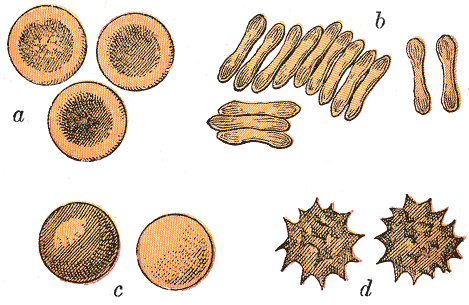
Hypotonic –refers to a solution that is lower in solutes than that of the fluid inside of a cell.  As a result, water will flow across the cell membrane into that cell (down its concentration gradient) from the surrounding environment eventually causing the cell to swell and burst (c).

Hypertonic  - refers to a solution that  is higher in solutes than that inside of a cell. As a result, water will flow out of the cell into the surrounding fluid eventually causing the cell to shrink or crenate (d).

Isotonic - refers to a solution whose concentration of solutes is equal to the concentration of solutes inside of a cell. The water flows equally across the membrane in both directions causing no change in the volume or shape of the cell (a,b).

You may have heard of isotonic saline being given as intravenous fluid. Isotonic saline has the same concentration of salt as the blood. The isotonic solution is safe to put into the blood whereas a hypotonic solution would cause blood cells to burst and a hypertonic solution would cause blood cells to shrink which could tear their membranes and cause loss of fluid.

So what does this have to do with skin care? While water movement is important in skin care and we want to make sure we are allowing water to move into the skin not out of the skin, the strength of the stratum corneum is not so fragile that we need to be concerned with tonicity. Where it does come in important is in preservative properties. I’ve had several questions about salt or sugar being preserving and its ability to kill bacteria. While its true that salt and sugar have preserving ability, it is highly dependent on the concentration. When the concentration of salt or sugar is hypertonic to the bacteria water will be pulled out of bacteria cells destroying them. But if that salt or sugar concentration is diluted to isotonic levels the bacteria cell can then thrive. 

Hypertonic solutions are not typically used in skin care because they can have a drying effect on the skin, but they are used in some topical applications. For instance in nasal sprays hypertonic solutions will dry sinuses. Hypertonic solutions can also be used for cleansing wounds or even for exfoliation.
The principle of hypertonic solution for preservation is used somewhat in food applications such as with jams and pickles.  However, the concentration of sugar and salt is still not enough to protect the food so refrigeration or canning is also used. So too with cosmetics, tonicity can help contribute to preservative, but alone is not enough.

Monday, December 10, 2012

Winter Skin Care

In Colorado winter is brutal on the skin. The arid conditions dry the skin, cause chapped hands and lips, and even dryness on areas that don't see the sun. Here are a few tips to help this winter:

1. Drink plenty of water. It will go to the skin to moisturize.

2. Use a mild cleanser in the shower. Some cleansers are harsh and can remove the skin's oils. Most handcrafted soaps are a good choice as they contain a good amount of natural oils. And don't overwash; soap up the personal areas, feet and underarms in the shower. Water may be enough for the rest.
3. Apply body oil or moisturizer immediately after showing while the skin is still damp. This will help lock in that moisture.
4. Don't take too long or too hot of a shower. Both can strip the skin of its natural oils.
5. Try using a salt scrub in the shower. Removing dead skin cells can help the oils soak into the skin better. And its easier in the shower to get to those dry spots. 

6. Wear gloves when going outside to protect your hands.
7. Make sure to get good oils in your diet. These oils help form the barrier function of the skin and hold water in. Olive oil is a good one, use it on your salads and vegetables.

Some people tend to use heavier balms and butters in the winter, the type that do not contain water like a lotion or cream does. Remember that 'moisture' means 'water' so to moisturize your skin you really need a cream or lotion that can actually bring water to the skin. An all oil product can coat and protect the skin from loosing water but cannot add water  to the skin.

Wednesday, December 5, 2012

Nutmeg, a Holiday Spice

Nutmeg, a spice often used in holiday drinks such as eggnog is a nut from several species of the Myristica tree. This is an evergreen tree found in Indonesia. Nutmeg is the seed of the tree while mace is the seed covering or aril; so both of these spices are obtained from the nut. And no, this mace is in no way related to the spray often used for self defense.  Like most herbs, nutmeg is rich in antioxidants but also is said to sooth a stomach ach and help diarrhea. It may also relieve stress and improve mental ability. However, nutmeg is also toxic so keep its use to a few sprinkles. Try buying nutmeg whole and grating it fresh when you use it – it won’t take much because the freshly grated has much more flavor than dried.

There is also some evidence that nutmeg can increase the fat tissue under the skin. This may prove useful in skin care to help fill in wrinkles. Something I will have to look into more.

Sunday, November 18, 2012

Market Wine Tasting


We went to a wine tasting today at Blue Mountain Vineyards near Berthoud, Colorado Today. Owners Bill and Christie Prewitt spent the summer vending at the Loveland Farmers Market and invited the other vendors over for an end of the season celebration. We all brought snacks and Bill and Christie poured the whites and reds for our enjoyment. We brought home the Reisling which was interesting in that it was not too sweet but not too dry and the Pinot Noir which we'll probably have with Thanksgiving.
We then got a tour of the property which they are working on setting up as a venue for weddings. Seemed there were lots of fun hiding places in the bushes for young children to enjoy. Even though we've had a frost so nothing was blooming it was still beautiful. It was great too to enjoy the company of other farmers market vendors outside the market in a relaxed setting.

LinkWithin

Related Posts with Thumbnails