Friday, February 8, 2013

Brooms: Synthetic or Natural?


corn broom


 How often do you think about brooms? I just bought a new one which got me to thinking. Which is better synthetic or natural?  Natural brooms are made from a type of grain called broomcorn or Sorghum vulgare. These flat bristled brooms in use today were apparently invented by the Shakers in the 19th century. Before that, brooms were more round, made with courser material and were less effective. However, the popularity of these so called corn brooms have decreased dramatically in recent years and much of the broom corn crop is now used to make more decorative items such as wreaths and baskets.  Although much of this broomcorn is grown in Kentucky, apparently a majority now is grown in Mexico. I’ve found that these brooms come in different qualities with some having very few bristles and so sweeping in inefficient. I look for the more dense brooms. Some other natural fiber brooms including yucca.

Synthetic brooms are becoming much more popular. They are made from nylon or polypropylene and are often chemically treated to allow them to attract more dirt. I didn’t realize that till now but I’ve found that dirt indeed does stick to these brooms and doesn’t come off. I never liked them because it seems like I am putting a lot of dirt away in the closet when I put the broom away.

My guess would be that the natural brooms are more ecological than the synthetic brooms. And I make it a point to support farming whenever I can, so I’ll stick to cornbrooms.

Which do you prefer?

Saturday, February 2, 2013

Good for You SuperBowl Food

Even though I don't care much for football or the Superbowl I sure enjoy having any kind of party and preparing food for it. Here are some things we'll be having for Superbowl.


Good For You Superbowl Snacks

Butternut Squash Fries
I’ve grown very fond of roasted butternut squash fries. Cut a butternut squash into strips like French fries. Place on a cookie sheet greased with olive oil and then sprinkle the strips with a small amount of olive oil. Cook at 400 F for about 40-50 minutes until cooked. Eat with catsup and salt just like you would french fries! We actually got some nice butternut squash from our garden during the summer so I'll be sure to save seed and plant lots more this summer.

Roasted Baby Peppers
It is easy now to find bags of miniature sweet peppers that are red, orange and yellow. These are great roasted as described above. Roasting makes them taste very sweet too, delicious.

Greek Yogurt Dip
Add dried mixed herbs to a cup or so of Greek Yogurt. Read the label and make sure you are getting just nonfat milk and cultures as opposed to additives like gelatin, pectin, or other polysaccharides, which just add calories and carbohydrates. For herbs, try parsley, dill and marjoram. If you don’t have these, try whatever herbs you have on hand. Use this as a dip for raw vegetables.

Enjoy the Super Bowl, I hope your team wins.

Wednesday, January 30, 2013

Balance Resolutions

Running a business, managing a farm, and caring for a family can take up more than the amount of time available in a day. I'm finding more and more its hard to carve time out for myself as my business grows so learning how to balance things is important. I also find that long work days and multiple interruptions can affect my ability to concentrate. I'm searching for ways to have more balance in my life. These are some resolutions I've made to find more balance in my life this year.

When the weather is nice, a walk mid-afternoon (during the warmest time of day) helps to relax and refocus. Sometimes that is not enough so I'm finding that just walking away from things every couple of hours to move my body is also important. I usually work by myself so blasting the radio and dancing for a few minutes is an option I can take advantage of more often.

In spring, summer and fall I work most Saturdays at the farmers market. This makes it important to focus on another day of the week to take off or at least fewer hours one day. I am trying to start a habit of working less on Fridays but not just that, I want to exercise more on Fridays since I never do enough of that. This will help relieve stress, help refocus and maintain weight. A friend of mine does Zumba on Friday mornings so that is a good opportunity to exercise and spend more time with a friend. Working solo limits the time I spend with other people. Although I network alot locally that is different than spending quality time with friends so another focus is to find new creative ways to spend time with friends.
My kids are nearly grown with one moved out and the other a senior in high school which allows me to spend more time now growing my business, but carving time out for myself is still important.
How do you balance your life?

Monday, January 21, 2013

2012 Conferences in Review

Christine Teeple, Sarah Richards, Cindy Jones

Ann Harmon, Cindy Jones

George Wahl at the Colorado Aromatics Booth at the Lavender Festival
Dr. Cindy Jones talking on Biochemistry 101 at the SCC meeting
Before we get too far into 2013 I want to review some conferences I've been to this year. Since my kids are getting older its getting easier to take trips and get to educational events.

In April I went to the International Lavender Conference in Sequim Washington. This was fun for a number of reasons. I got to meet in person some colleagues I'd been working with in developing the United States Lavender Association (USLGA); Mary and Tim Bergstrom, Curtis Swift, Kathy Kimbrough, Sarah Richards and Christine Teeple, as well as making many more friends in the lavender industry. I also met Annie Harmon of Morning Myst Botanics who I'd been collaborating with and talking to for many years about distilling.

Summers were busy with farmers markets but we went to the Western Colorado Lavender Association's second annual Lavender Festival. This was our second time so we've been to all of them. My son and our foreign exchange student went with us and helped alot. Its a great festival with a great crowd.

We managed a trip to visit family in August. Then I went back to Grand Junction to attend the SW Lavender conference in September. At that meeting I talked on Using Distillates in Cosmetics. I toured some of the lavender farms their and visited with friends/colleagues again.

In November I went to the Intermountain West's Society of Cosmetic Chemists meeting in Salt Lake City. There I gave a talk on Biochemistry 101; a basic biochemistry talk that addressed the chemical groups of cosmetic ingredients. This was a great opportunity to meet with other cosmetic chemists and learn about more ingredients. I also had the opportunity to tour some manufacturing facilities.

I hope to take a few fun trips in 2013 as well, although nothing is definate yet.


Monday, January 7, 2013

Marinated Black Eyed Peas

Black eyed peas are a symbol of good luck and prosperity in the new year; at least in the Southern USA. My husband made this delicious black eyed peas salad for New Year's Dinner.  According to Wikipedia it is also eaten on the Jewish New Year, Rosh Hashana, for good luck. The reason I liked this recipe is that it is vegetarian and light. This recipe is adapted from "Vegetarian Celebrations" by Nava Atlas. If you didn't get enough black eyed peas for your Good Luck, I'm sure its not too late to try this recipe.

2 cups black eyed peas (canned or cooked yourself)
1 red bell pepper cut into strips
1/4 cup finely chopped onion
3 tablespoons fresh parsley
3 tablespoons olive oil
juice of 1/2 lemon or more to taste
1 garlic clove crushed/chopped
salt and pepper to taste

Mix all ingredients together and let sit an hour or more for flavors to blend. We had this with cornbread.
Do you have another vegetarian black eyed peas recipes?

Sunday, December 30, 2012

Tonicity's Effects on Cells


I enjoy writing articles periodically about more serious science topics that play into developing a better understanding of cosmetics. This one is on tonicity. Tonicity refers to the affect of a solution on a cell. A solution  is a mixture of two or more substances in which one (a solute) is dissolved in the other (a solvent). So a solute is the substance that is dissolved in a solvent to form a solution. This solution is homogeneous, meaning that it is a single phase and none of the solute is visible in the solvent. Common solutes would be salt or sugar. A common solvent would be water.

That solute can exert a certain amount of pressure referred to as tonicity. This pressure can affect the fluid volume and the pressure in a cell by affecting the movement of water down its concentration gradient. Yes, water, as other molecules will move down it’s concentration gradient.

Tonicity has three classifications; hypertonicity, hypotonicity and isotonicity. These refer to the concentration of a solution in reference to a living cell (a membrane bound structure). 

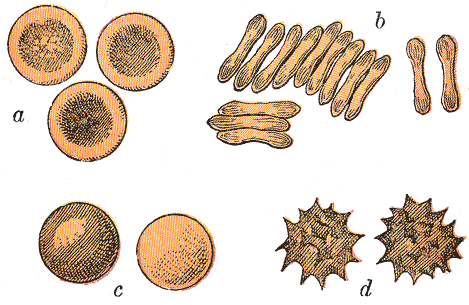
Hypotonic –refers to a solution that is lower in solutes than that of the fluid inside of a cell.  As a result, water will flow across the cell membrane into that cell (down its concentration gradient) from the surrounding environment eventually causing the cell to swell and burst (c).

Hypertonic  - refers to a solution that  is higher in solutes than that inside of a cell. As a result, water will flow out of the cell into the surrounding fluid eventually causing the cell to shrink or crenate (d).

Isotonic - refers to a solution whose concentration of solutes is equal to the concentration of solutes inside of a cell. The water flows equally across the membrane in both directions causing no change in the volume or shape of the cell (a,b).

You may have heard of isotonic saline being given as intravenous fluid. Isotonic saline has the same concentration of salt as the blood. The isotonic solution is safe to put into the blood whereas a hypotonic solution would cause blood cells to burst and a hypertonic solution would cause blood cells to shrink which could tear their membranes and cause loss of fluid.

So what does this have to do with skin care? While water movement is important in skin care and we want to make sure we are allowing water to move into the skin not out of the skin, the strength of the stratum corneum is not so fragile that we need to be concerned with tonicity. Where it does come in important is in preservative properties. I’ve had several questions about salt or sugar being preserving and its ability to kill bacteria. While its true that salt and sugar have preserving ability, it is highly dependent on the concentration. When the concentration of salt or sugar is hypertonic to the bacteria water will be pulled out of bacteria cells destroying them. But if that salt or sugar concentration is diluted to isotonic levels the bacteria cell can then thrive. 

Hypertonic solutions are not typically used in skin care because they can have a drying effect on the skin, but they are used in some topical applications. For instance in nasal sprays hypertonic solutions will dry sinuses. Hypertonic solutions can also be used for cleansing wounds or even for exfoliation.
The principle of hypertonic solution for preservation is used somewhat in food applications such as with jams and pickles.  However, the concentration of sugar and salt is still not enough to protect the food so refrigeration or canning is also used. So too with cosmetics, tonicity can help contribute to preservative, but alone is not enough.

Monday, December 10, 2012

Winter Skin Care

In Colorado winter is brutal on the skin. The arid conditions dry the skin, cause chapped hands and lips, and even dryness on areas that don't see the sun. Here are a few tips to help this winter:

1. Drink plenty of water. It will go to the skin to moisturize.

2. Use a mild cleanser in the shower. Some cleansers are harsh and can remove the skin's oils. Most handcrafted soaps are a good choice as they contain a good amount of natural oils. And don't overwash; soap up the personal areas, feet and underarms in the shower. Water may be enough for the rest.
3. Apply body oil or moisturizer immediately after showing while the skin is still damp. This will help lock in that moisture.
4. Don't take too long or too hot of a shower. Both can strip the skin of its natural oils.
5. Try using a salt scrub in the shower. Removing dead skin cells can help the oils soak into the skin better. And its easier in the shower to get to those dry spots. 

6. Wear gloves when going outside to protect your hands.
7. Make sure to get good oils in your diet. These oils help form the barrier function of the skin and hold water in. Olive oil is a good one, use it on your salads and vegetables.

Some people tend to use heavier balms and butters in the winter, the type that do not contain water like a lotion or cream does. Remember that 'moisture' means 'water' so to moisturize your skin you really need a cream or lotion that can actually bring water to the skin. An all oil product can coat and protect the skin from loosing water but cannot add water  to the skin.

Wednesday, December 5, 2012

Nutmeg, a Holiday Spice

Nutmeg, a spice often used in holiday drinks such as eggnog is a nut from several species of the Myristica tree. This is an evergreen tree found in Indonesia. Nutmeg is the seed of the tree while mace is the seed covering or aril; so both of these spices are obtained from the nut. And no, this mace is in no way related to the spray often used for self defense.  Like most herbs, nutmeg is rich in antioxidants but also is said to sooth a stomach ach and help diarrhea. It may also relieve stress and improve mental ability. However, nutmeg is also toxic so keep its use to a few sprinkles. Try buying nutmeg whole and grating it fresh when you use it – it won’t take much because the freshly grated has much more flavor than dried.

There is also some evidence that nutmeg can increase the fat tissue under the skin. This may prove useful in skin care to help fill in wrinkles. Something I will have to look into more.

Sunday, November 18, 2012

Market Wine Tasting


We went to a wine tasting today at Blue Mountain Vineyards near Berthoud, Colorado Today. Owners Bill and Christie Prewitt spent the summer vending at the Loveland Farmers Market and invited the other vendors over for an end of the season celebration. We all brought snacks and Bill and Christie poured the whites and reds for our enjoyment. We brought home the Reisling which was interesting in that it was not too sweet but not too dry and the Pinot Noir which we'll probably have with Thanksgiving.
We then got a tour of the property which they are working on setting up as a venue for weddings. Seemed there were lots of fun hiding places in the bushes for young children to enjoy. Even though we've had a frost so nothing was blooming it was still beautiful. It was great too to enjoy the company of other farmers market vendors outside the market in a relaxed setting.

Monday, November 5, 2012

Comfrey Uses


Comfrey (Symphytum officinale) is one of those herbs that if you have it, you’ll have alot of it; it is very easy to grow and reproduces rapidly.  It is one herb that is still going strong now after the frost. Studies have found that comfrey contains an alkaloid which is toxic to the liver. Most plants however contain both toxins and beneficial chemicals that balance each other out. I’d advice not taking comfrey orally on a daily basis, but occasionally when the need arises I’ve drank comfrey tea.

What can you do with comfrey?

Skin Care:
Make an oil infusion of the leaves or root. Comfrey stimulates cell growth and can help renew skin cells. Comfrey contains allantoin, a chemical that helps skin grow.  You might find this ingredient on the label of a high quality face cream. An infused oil of comfrey is nice in a bath/body oil too.

For Pain:
Comfrey works well for pain relief and an infused oil can be incorporated into a balm used for that purpose. We use it in our Joint Jam. Compresses of comfrey are also good for back pain.

Wounds:
Because it stimulates cell growth it is excellent for treating wounds on the skin as well as sprains and broken bones. Use comfrey on wounds as a poultice or an infusion. Comfrey also decreases inflammation. Use comfrey teas or infusions in the bath. Teas of comfrey are also drank to increase bone growth after a break.

In the Garden
The large leaves of comfrey are great for use as mulch, but comfrey’s most important role is in the compost heap. Its high mineral and nitrogen content will benefit compost. You can also make a tea from comfrey for the garden. If you have comfrey growing at this time of year, be sure to harvest and put it in the compost.

Animals
Comfrey is rich in both minerals and protein and makes a good livestock feed. Because of its abundance I’ve given it to my chickens, goats and horses. It’s recommended to at least let it wilt slightly before feeding it to animals so the prickly hairs do not bother them. If you have grazing animals it is great to cut your comfrey for them at this time of year when grass is not abundant for grazing.

This blog is part of a Blog Hop by Possum Creek Herb Farm in Tennessee. Stop by their blog to find other herb posts:
http://possumcreekherbfarm.blogspot.com/2012/11/the-love-of-herbsblog-hop.html

Tuesday, October 23, 2012

We Love Herbs

We are trying hard to extend the growing season for some of our herbs. Although it doesn't look like it's working well, we are eternal optimists. We are passionate about using herbs in our skin care products.

Besides supporting small farms why do we use herbs in cosmetics?

1. We believe using herbs contributes to a healthier more sustainable lifestyle.
2. Herbs are rich in a variety of nutrients such as carotenoids that provide skin benefits.
3. Herbs are rich in antioxidants that help repair skin damage. 
Some of our favorites are calendula, lemon balm, lavender, raspberry leaf, chamomile and hops.


Friday, October 12, 2012

Yarrow


I am trying to learn more about the native herbs that grow in Colorado so I can rely less on the European herbs that were transplanted here. Did you know that the common yarrow which is native to Colorado has been called ‘field hops’ because it can be used in making beer? It’s young leaves are also edible and can be used dried or fresh in soups and stews. Medicinally, yarrow is an antiinflammatory herb and contains a high amount of saponins which are cleansing, or sudsing agents. Yarrow is also useful for calming irritated and inflammed skin which makes it great for use in skin care products.  Some herbalists use it for cuts as well as bruises and even as a tea to help with colds and flu.

Here is a great blog I came across about the lore of yarrow. http://blog.whitelotusaromatics.com/2011/10/plant-lore-yarrowmilfoil_02.html 

Do you have a favorite native herb that you use. 

LinkWithin

Related Posts with Thumbnails